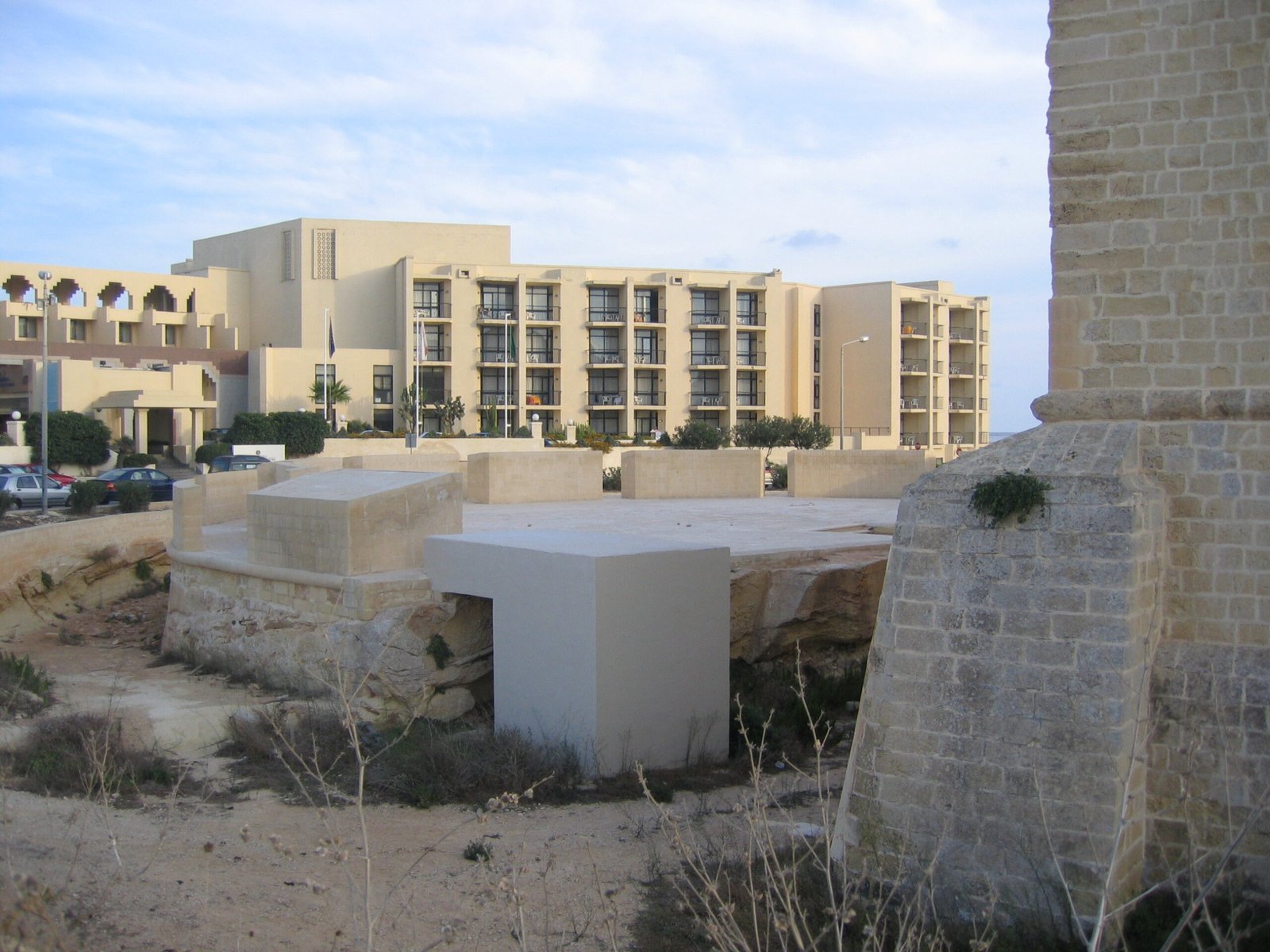
St Thomas Tower is the historic landmark visitors sometimes describe as “Jerma Tower”, because of its position beside the former Jerma Palace Hotel. Its proper name matters: the tower is a seventeenth-century coastal fortification, while the hotel belongs to the twentieth century.
Today, the tower houses the Pirates and Corsairs Museum, giving visitors a way to connect the building’s defensive purpose with the maritime history it interprets. This guide introduces seven reasons to visit, explains what to look for and helps you plan a comfortable heritage stop in Marsaskala.
Visitor information checked on 11 October 2026. Confirm opening hours, tickets and any access requirements with the operator before travelling.


1. St Thomas Tower connects Marsaskala with 1614
Fondazzjoni Wirt Artna’s official visitor page dates the tower to 1614, describes it as the third of six Wignacourt towers and identifies it as Malta’s largest watchtower. Its location on the il-Ħamrija headland was chosen to defend the anchorages of Marsaskala Creek and St Thomas Bay.
This places the building in an early modern world of coastal defence and maritime conflict. It is not an ancient ruin from classical times, and it was not constructed for the neighbouring hotel. Understanding that chronology makes the site more interesting rather than less dramatic.
Before entering, take a moment to look at the building as a whole. Its scale is part of the story. A fortification designed to control a stretch of coastline needed more than a place for someone to stand and watch the sea.
2. Look at St Thomas Tower as a small fort
The Superintendence of Cultural Heritage’s inventory describes a fortino, a small fort-like structure built to resist bombardment and support heavy cannon. It records a square plan, four projecting corner turrets, adjoining internal casemates and an entrance historically served by steps and a drawbridge.
These features help visitors read the building. The corner projections are not decorative additions; they belong to a defensive design. The relationship between walls, entrance and surrounding space also makes more sense when viewed as part of a fortification.
The same inventory records Grade 1 protection, scheduled in 1995. That is a reminder that the site is cultural property requiring care. Treat its fabric respectfully and follow the museum’s instructions about access, photography and touching displays.
A simple observation exercise
Ask yourself three questions: how was the entrance controlled, what could defenders see, and how does the structure relate to the sea? You do not need specialist architectural knowledge to start noticing the answers. Use the museum interpretation to test your impressions rather than turning a guess into a historical claim.
3. Discover St Thomas Tower’s later coastal battery
The heritage inventory dates the adjoining battery to 1715–16. Its account also explains that the gun platform was later restored with a reconstructed parapet and embrasures on interpretative lines. This is useful context when comparing the tower with archive photographs.
Historic sites often contain several periods of construction and restoration. St Thomas Tower is a good example: the original tower, the later battery and modern conservation should not be collapsed into one date. Each contributes to what visitors see today.
When looking at a restored feature, ask which parts survive from the historical structure and which help explain its original function. Restoration can improve understanding, but a clear explanation is more valuable than assuming every visible element is untouched seventeenth-century fabric.
4. Visit the museum inside St Thomas Tower
Fondazzjoni Wirt Artna’s announcement of 8 August 2025 records the museum’s opening to visitors following restoration. It describes original period objects, audiovisual interpretation, interactive elements and displays about piracy and corsairing, including Malta’s place in Mediterranean maritime conflict.
The distinction between a pirate and a corsair is part of the subject. The operator’s account describes corsairs as acting with state licences. That historical context is more informative than treating everyone at sea as the same romantic character with a treasure map.
Take time with the interpretation. Maritime conflict affected trade, coastal communities and the people caught within it. A museum visit can explore those realities while still being engaging for families. The building itself provides a strong connection between the displays and the reason coastal defences were needed.
Visiting with children
Begin with a few clear questions: why was the tower built here, how did people defend it, and what does the museum teach about life at sea? Let the answers come from the displays rather than trying to explain everything before the visit.
Choose a pace that suits the group. A child who enjoys one object and understands its story may get more from the visit than someone rushed through every room. Ask the operator about suitable activities and any arrangements for school or group visits.
5. Understand the tower’s coastal position
St Thomas Tower makes more sense when you consider the surrounding shoreline. From a lawful, open viewpoint, look at the relationship between the headland, the bays and the routes along the coast. The sea is not just a backdrop; it is central to the building’s purpose.
The neighbouring hotel site provides a different historical layer. A photograph can include both buildings, but they should be identified separately. One tells a story about coastal defence; the other about modern tourism and redevelopment debates.
For landscape photography, choose a safe public position and include enough context to show the tower’s setting. Avoid climbing barriers or moving into closed areas for a more dramatic angle. A clear view from an ordinary route can be more informative than a close-up that hides the surroundings.
6. Plan a comfortable visit to St Thomas Tower
At the time of checking, the operator listed opening hours of Monday to Saturday, 09:30–17:30, with specified holiday exceptions. Its visitor page identifies Grigal and Sdieri as nearby bus stops. Use the current visitor page for confirmation and the official journey planner for your route.
Check the visit arrangements rather than assuming the building is open whenever the exterior is accessible. Ask about last admission, tickets and any requirements relevant to your group. Leave time to appreciate the exterior as well as the museum.
- Before leaving: confirm the opening day and current ticket information.
- For transport: save the destination and check the final walking approach.
- For accessibility: consult the operator’s access information and ask about your specific needs.
- For photography: follow rules for displays and other visitors.
- For groups: enquire about arrangements in advance.
A historic defensive building can have a different layout from a modern museum. Do not assume every area has the same level of access. A specific enquiry about stairs, surfaces and facilities is more useful than relying on a general description.
7. Build a heritage day around St Thomas Tower
Make the museum your main timed stop, then leave the rest of the visit flexible. A meal, a short open coastal walk and a visit to St Thomas Bay can complement the history without creating a rushed schedule.
Our Marsaskala visitor guide provides wider ideas, while the coastal walks guide explains a different part of the shoreline. Check distances and present conditions before combining activities.
For visitors interested in the former Jerma site, keep to open public routes and use historical photographs to understand its earlier appearance. The tower is a managed visitor attraction; the neighbouring abandoned hotel should not be treated as one.
Watch a visit to the tower
This episode of The Local Traveller with Clare Agius introduces St Thomas Tower. Video footage is background interpretation; use the operator’s website for current visit arrangements.
Three ways to get more from St Thomas Tower
Begin outside. Look at the scale and shape before focusing on individual details. Consider why a substantial defensive building occupies this particular headland, then compare your impressions with the museum’s interpretation.
Follow one theme inside. You might focus on the building’s defences, the experience of people at sea or the difference between piracy and licensed corsairing. Choosing a theme makes it easier to connect several displays without feeling you must absorb every detail at once.
Finish with the wider landscape. After the visit, look again at the coastline from an open public position. The museum’s explanations may change how you understand the relationship between the tower, bays and maritime routes.
For a family visit, ask everyone to choose one detail they found interesting and explain why. This creates a conversation about the experience without turning it into a test. A photograph of the exterior and a short note about the favourite display can preserve the memory.
If you return to St Thomas Tower, bring a different question. Historic places can reward several visits because the building, objects and surrounding landscape each offer another way into the story.
Plan a visit around one historical question
Before visiting St Thomas Tower, choose a question you would like the museum to answer. You might ask how a coastal fort was supplied, why its entrance was defended, or what distinguished a licensed corsair from other maritime raiders.
As you visit, look for displays and architectural details relevant to that question. This gives the experience a clear thread without limiting what you can enjoy. If something remains unclear, ask a member of the museum team rather than guessing from the building’s appearance.
For a group, let each person choose a different question and compare answers afterwards. One person may focus on objects, another on the structure and another on people’s lives. A meal or short walk after the visit provides time for that conversation.
Keep a note of the source if you plan to write or share information about St Thomas Tower. Distinguish the operator’s current visitor details from historical interpretation, and attach dates to photographs. This makes your account useful to others without turning a personal visit into an assumed timetable for the attraction.

St Thomas Tower: frequently asked questions
Is it the place called Jerma Tower?
The historic tower beside the former Jerma hotel is St Thomas Tower. Use that name when searching for tickets and visitor information.
When was St Thomas Tower built?
The operator and heritage inventory date it to 1614. The adjoining battery is a later addition.
What is inside St Thomas Tower today?
The Pirates and Corsairs Museum, operated by Fondazzjoni Wirt Artna.
Can I visit on Sunday?
The published schedule checked for this article was Monday to Saturday. Confirm directly before arranging a Sunday or holiday visit.